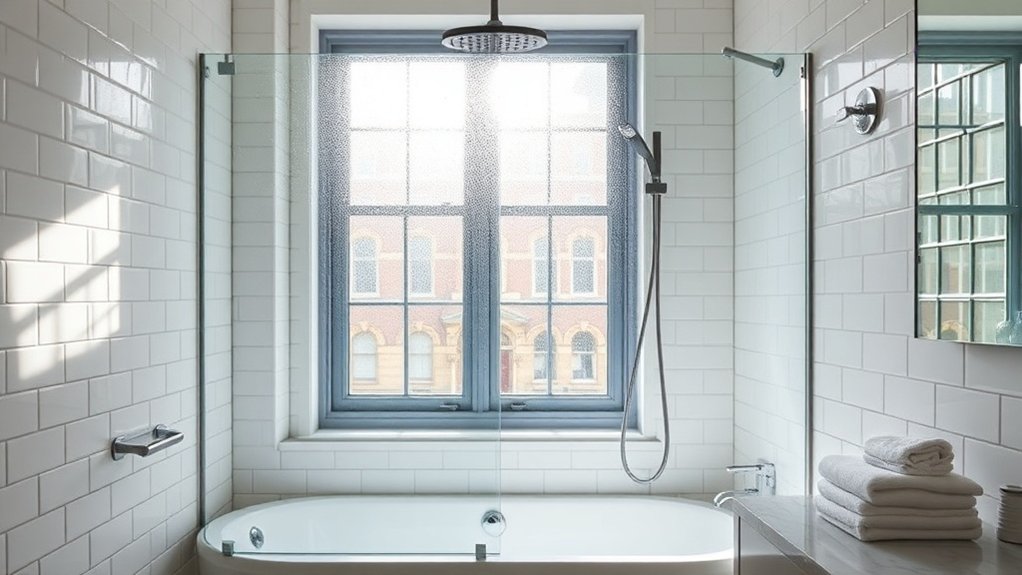
A properly specified bath screen does three jobs in a Nunhead bathroom: it keeps shower water in the bath, it makes the room look cleaner and more finished, and it protects the floor, skirting and vanity unit from the slow damage that a curtain never quite prevents. Fixed, folding and sliding versions suit different rooms. Whichever you choose, insist on toughened safety glass, brass or stainless-steel fittings and careful fixing and sealing. Get those right and even a small flat gains light and apparent floor area.
Key insights
- A bath screen turns a shower-over-bath into a contained wet zone and stops water reaching subfloors, skirting and cabinetry in Nunhead homes.
- Clear or low-iron glass with slim profiles makes a small Nunhead bathroom feel bigger; framed screens in black or brass add structure and suit period rooms.
- Glass should be 6 to 8 mm toughened to BS EN 12150, with hardware rated for the panel weight; Part K covers impact safety.
- Typical supplied-and-fitted prices run from around £180 for a basic screen to £1,800 or more for bespoke frameless systems.
How Bath Screens Transform Nunhead, SE15 Bathrooms
Fitting a decent bath screen in a Nunhead home does more than stop splashes on the floor. It turns the bath into a defined shower zone and keeps water off the grout lines, the floorboards under the bath panel and the base of the vanity, which is where rot and swollen MDF usually begin. It also retires the shower curtain, which traps damp fabric against the bath edge and grows mould along the hem within months. Glass dries quickly and, fitted with a small gap at the top, lets air move through the room while the extractor does its job.
The third gain is visual. Clear or low-iron glass keeps the full length of the wall in view, so a narrow Nunhead bathroom reads as one space rather than two.
Bath Screen Types and Which Homes They Suit
Choosing between a fixed panel and a folding screen is a trade between rigidity, clear view and day-to-day convenience. The right answer depends on the room's footprint, where the taps sit, and the space each hinge mechanism needs to open in a compact Nunhead floor plan.
Fixed Panel Bath Screens
The fixed panel is the simplest bath screen and often the best looking. A single sheet of toughened safety glass is fixed to the wall with a channel or brackets and sits on the bath rim, giving a static barrier that does not rattle, sag or leak even under a powerful shower. An 8 or 10 mm panel feels solid and lasts for decades. Fixed panels suit long narrow bathrooms, loft conversions with sloping ceilings and refits where you want nothing swinging into the room.
Folding Bath Screen Options
Plenty of Nunhead, SE15 homes need a screen that gets out of the way. A folding bath screen runs on a set of hinges so the glass can be swung open for bathing a child, folded flat against the wall to clean the bath, or opened fully when guests are staying. Three-, four- and five-panel systems come framed or frameless, and made-to-measure versions let you set panel widths, folding direction and handle position to clear a deck-mounted tap, a radiator or a window reveal.
Best Screens For Small Bathrooms
In a small Nunhead bathroom the screen has to keep the floor dry without dominating the room. Clear low-iron glass lets the existing lighting work across the whole room, so it feels larger than it is.
Single fixed panel – The answer for most narrow Victorian terraces. A frameless 8 to 10 mm sheet fixes to the wall and leaves the tap end open, with room for a towel rail beyond.
Folding multi-panel screen – The family-flat option. It concertinas against the wall when nobody is showering, giving room to lean over the bath, and it folds flat for cleaning.
Sliding bath screen – For micro-bathrooms where nothing can swing. The glass runs on a concealed track, so the basin and the vertical towel rail stay out of the way.
Planning a Bath Screen for Shower-Over-Bath Layouts
Planning starts with where the water actually goes. Trace the spray path from the shower head to the floor and note the weak points: the tile-to-bath junction, any window reveal within reach, and the outer corner of the bath rim where water drips. A rainfall head or a higher-pressure valve throws water further and bounces it higher, which usually means a wider or taller screen than the one you had before. Set the screen height so steam rises towards the extractor rather than rolling over the top towards the door. Finally, decide how the bottom edge meets the bath rim and how the wall channel is sealed, because capillary creep along these two joints causes most long-term leaks.
Frameless vs Framed Bath Screens
Frameless and framed bath screens differ in how they look, what they cost and how they age in a Nunhead, SE15 home.
Aesthetic And Design Impact
A frameless screen puts almost nothing between you and the wall, so large-format tiles, a feature wall and good brassware read as one surface. It is the choice for a calm, gallery-like look. A framed screen draws a line through the room that can tie a scheme together: black, brass or colour-matched frames can pick up the window frames, the taps or the door furniture.
Cost, Durability And Maintenance
On the quote, a framed screen is nearly always cheaper. A frameless screen costs more up front, but it takes less time to clean and it tends not to date as quickly. Fewer seals and joints mean fewer places for limescale and mould to collect, so a frameless panel wipes down in a minute. Judged over ten or fifteen years, a good frameless screen is usually the better buy.
Bath Screen Glass Thickness, Safety and UK Rules
- Thickness – Most Nunhead bath screens use 6 or 8 mm toughened glass; 10 mm is the premium choice for tall panels or screens with very little framing, because it barely flexes.
- Glass safety – Specify toughened glass to BS EN 12150, which is heat-treated so that if it ever breaks it crumbles into small blunt pieces rather than shards.
- UK regulations – Check the screen satisfies Part K of the Building Regulations on protection from impact and carries UKCA or CE marking. Ask for the declaration of conformity and look for the kitemark etched on the glass edge.
Bath Screen Privacy: Clear, Frosted and Tinted Glass
All three glass types keep the water in the bath; the difference is how much they show and how they change the light in a Nunhead bathroom. Clear glass gives the brightest room and the longest sightlines. Frosted glass adds modesty while still letting light through: acid-etched or sandblasted finishes soften outlines to a blur, and you can specify a band at eye level or a gradient that clears towards the top, so the screen gives privacy only where it is needed. Tinted glass in grey, bronze or a faint blue cuts glare, so consider how much daylight the room gets before choosing a dark tint.
Matching Your Bath Screen to Modern or Period Bathrooms
Before choosing a bath screen for a Nunhead bathroom, look at what the room already has: cornicing, a sash window, a cast-iron radiator, cross-head taps. In a period bathroom those features call for a framed screen, traditional finishes and glass panels in sensible proportions. A contemporary room wants the opposite, a near-invisible panel with precise, minimal hardware.
Coordinating With Period Features
- Frame profiles – Line the frame up with the architrave and sash bars; a stepped or ogee section suits a heritage scheme better than a flat box section.
- Hardware detailing – Match hinge shape, knurling and handle backplates to the door furniture and taps already in the room.
- Glass specification – Reeded, lightly patterned or softly tinted glass echoes traditional glazing without giving up any of the modern performance.
Minimalist Screens For Modernity
A minimalist bath screen does not have to strip the character out of a period Nunhead home; handled carefully it sharpens the architecture. Low-iron glass, slim anodised or powder-coated profiles and concealed fixings keep the visual clutter to a minimum. Line the screen up with the grout joints and the centreline of the taps, and match the frame finish to the brassware.
Blending Old And New
Where cornicing and a sash window share the room with new sanitaryware, go for very slim aluminium channels in a warm metallic finish, which sit happily between period brassware and modern tapware. Specify low-iron 8 to 10 mm toughened glass, keeping the main panel clear and reserving reeded or bevelled sections for the edges nearest the original features. Match the shape of the hinges to the architecture, not just the colour: square-edged for modernist lines, rounded for period curves.
Choosing Bath Screen Hardware and Finishes
Hardware and finishes decide how a bath screen works every day and how it will age under Nunhead, SE15 hard water and family use. PVD-coated solid brass gives the best corrosion resistance, marine-grade stainless steel suits slim minimal profiles, and aluminium is light and economical for tighter budgets. Check the load rating of the hinges and brackets covers your glass; a 10 mm panel is heavy.
Soft-close hinges, pivots that cannot lift off and adjustable wall profiles that take up a wall that leans make the screen pleasant to use. Match the finish to the taps and towel radiator rather than choosing in isolation.
Bath Screen Prices in Nunhead and What Drives Them
Bath screen prices in Nunhead fall into clear bands between off-the-shelf screens, semi-bespoke options and fully bespoke frameless systems, and awkward rooms push every band upwards.
Key Bath Screen Price Factors
Bath screen material and glass spec – Toughened versus laminated, low-iron ultra-clear glass and factory easy-clean coatings each add a step in price and a step in performance and clarity.
Installation height and geometry – A tall screen needs thicker glass, stronger hinges and tighter tolerances, otherwise it flexes and the seals weep.
Hardware and opening strategy – Soft-close pivots, hidden fixings and the choice of framed or frameless change both fabrication time and the time spent on site.
Typical Nunhead Cost Ranges
Entry-level stock screens cost roughly £180 to £350 supplied and fitted. Mid-range semi-frameless screens or stock screens with upgraded glass sit at about £350 to £750. Bespoke or fully frameless systems commonly run from £750 to £1,800 or more depending on specification. Installers also price the wall: brittle porcelain, large-format tiles and weak backer boards need specialist fixings and more time.
Common Bath Screen Problems to Avoid and When to Replace
Watch for water tracking along the seals, hinges that stiffen or drop out of line, and glass that stays cloudy after a proper clean. Replace the screen when a chipped or cracked panel, corroded profiles or fixings that have worked loose make it unsafe; when repeated leaks, a sagging door or seals that no longer close up however much you adjust them; or when you want a different look, such as a frameless layout or low-iron recycled glass.
See our main shower screens and bathroom glazing page for the full range of options in Nunhead. Related work we take on includes bathroom frosted glass and wet room glass panels.
Frequently Asked Questions
Are Bath Screens Suitable for Households With Young Children or Elderly Users?
Yes, provided the configuration suits the people using it. For young children, specify toughened or laminated glass, hinges with no finger-trap gap, and seals that run the full height so there is less water on the floor to slip on. For older users, a hinged screen that opens wide makes it easier to step in and out, and soft-close hinges stop the door swinging back into someone mid-step.
Can I Combine a Bath Screen With Smart Shower Controls or Digital Mixers?
Yes. A digital mixer works well behind a bath screen as long as it is planned at the same time. The valve box normally sits in the loft, under the bath or in an adjacent cupboard, with only the controller on the tiled wall. Specify IP-rated components for anything inside the wet zone and route the cable before tiling so nothing crosses the screen's fixing line.
How Do Bath Screens Affect Ventilation and Mould Risk in Small Bathrooms?
A hinged or sliding screen with a small gap at the top lets steam escape towards the extractor rather than trapping it over the bath, and an opening window or a well-placed extractor fan near the screen keeps the air moving. To limit mould, choose a hydrophobic coating on the glass, keep framing to a minimum so there are fewer condensation traps,.
Can Bath Screens Be Adapted for Accessibility or Future Mobility Needs?
They can, and it is cheaper to plan for it now than to retrofit later. Specify a wider opening, a bath with a low rim or a plan to replace it with a level-access shower, and a screen that is compatible with both. Folding or sliding panels, offset pivots and height-adjustable hinges all increase the clear entry width.
Summary
A good bath screen keeps water in the bath, keeps the floor and the furniture dry and makes a cramped Nunhead bathroom look sharper and feel bigger. Match the screen type to the layout and the budget, specify toughened glass and decent hardware, and have it fitted by someone who surveys first. If you would like a free measure and quote for a bath screen in Nunhead, give us a call and we will come and look at the room.